Monday, 10 September 2012

DRC: a playground of military alliances.


 By Gael Masengi


After a brief mandate of European Union Force (EUFOR) back in 2006, a total decade failure of the muscled United Nations peacekeeping mission (MONUC) and lasting peace was never established, yet, the Democratic Republic of Congo is getting ready to welcome another army of clowns, this time is the so-called “neutral-international force” ‘to enforce peace’ in war torn eastern side of the country.

Congolese soldier
On Saturday, the lengthy diverted summit of a bloc called Great Lakes States in Kampala, Uganda, came to an end central and eastern African leaders agreed on the force composition which is said to be stationed in the Kivu regions to counterattack the ‘unstoppable’ Rwanda-backed, M23 rebels, but the unborn mission is threatened in advance by lack of money and international credibility. The question of who will finance the project that’s still a mystery; analysts believe that the talks may remain a pipe dream not only because cash is the main obstacle but the motive and the length of the mission is not clear.

Confronted by many challenges since his supposedly re-election in November last year, one of them legitimacy, Joseph Kabila has hit a dead-end when it comes to restoring his image as a capable president or a leader, throughout his more than ten years of dictatorship-like reign in wealthy DRC the man has failed beyond doubt to secure the country’s borders, repair the dysfunctional infrastructures, regenerating the economy or implementing a better social life for ‘his’ people. Yet, he’s accused of “treason”, Joseph Kabila faces an army of angry frustrated people who want nothing else but an explanation of Rwandan insurgents’ infiltration on the national defence force, again Joseph Kabila whose national approval rating probably is less than ten per cent, is unsuccessfully trying to appear to still be in charge of a larger country way beyond his governing means. Isn’t an irony that a country in size of western Europe is nowhere near military capabilities to defend its territories or treasury to fund or pay its public workers?! But its ‘president’, Kabila is opting to organise international event such as Francophonie summit (OIF) set for this 14th October in dusty Kinshasa, insisting on foreign leaders’ attendance, for one reason, to clean his polluted character and he’s willing to pay whatever price.

Tanzania, a fellow SADC country member is willing to contribute largely to the joint force with Kenya, the Republic of Congo and Angola offering their help as well but details of how they will contribute is still unknown. Congolese officials have said to refuse any participation of Rwanda and Uganda in the adventure –though both countries claim to have security interests in Congo– it also remains unclear whether Congolese troops will be part of the multinational force or they will manoeuvre around the mountainous eastern region by themselves without help from natives.

Thursday, 23 August 2012

South Africa: It’s either “Made in Palestine” or “Not in Israel”


By Gael Masengi

The South African cabinet has approved a proposal requiring products originating from Palestine’s Israeli occupied territories not to be labelled as “Made in Israel” rather “Made in Occupied Palestinian Territory”.

Jimmy Manyi, government spokesperson said in press briefing on Wednesday “ Cabinet approved that notice, in terms of Consumer Protection Act, 2008, be issued by the Minister of Trade and Industry requiring the labelling of goods or products emanating from Israel occupied territories to prevent consumers being led to believe such goods come from Israel.”  This comes as South Africa (along other countries) only recognises the 1948 borders as it did vote in favour of that resolution in 1947 –which the United Sates’ president, Barack Obama also once urged Israeli and Palestinian people to base peace talk on– delineated by the United Nations and does not recognise occupied territories beyond those borders as being part of the Jews state. Earlier this year, Minister of Trade and Industry, Rob Davies already announced his plan to issue an official notice to require traders in South Africa not to incorrectly label products that come from the Occupied Palestinian Territory (OPT) as products of Israel.     

For years South Africa had a ‘not-so-good’ relation with Israel, but recently it has exploded when Ebrahim Ismail Ebrahim, South African deputy Minister of International Relations and Cooperation publicly called upon South Africans to avoid visiting Israel because Its treatment of Palestinians –a system which is always been compared to the Apartheid regime and black South Africans can relate to– “Israel is an occupier country which is oppressing Palestine, so it is not proper for South Africans to associate with Israel,” He said “We discourage people from going there except if it has to do with the peace process.”  The comments incited angry response from Jerusalem, “This proves our point,” Israel Foreign Ministry spokesperson Yigal Palmor said. “All their initiatives to mutually inform, as it were, the consumer are nothing but a boycott in disguise. Now things have come out into the open as a senior member of the government is openly calling for generalised, non-discriminating and discriminatory boycott of Israelis.” Time of Jerusalem

Israel Hit back

On Wednesday, the Israeli Deputy Foreign Minister Danny Ayalon slammed South African authorities for the recent killing of 34 striking platinum miners in Marikana, North West province. “At the moment South Africa’s Apartheid is aimed at Israel and against miners within South Africa itself,” Ayalon said. “Instead of deciding to label Israel products, South Africa should have acted courageously towards the 34 innocent miners that were just asking for an improvement in working conditions.”

Israel was once one of a few nations to have strong relations with Apartheid government in South Africa.

Thursday, 16 August 2012

African cities,worst places to be!


By Gael Masengi

The Economist has ranked Ten African Cities as the world worst liveable cities in its recently released 2012 Global “Liveability” Survey.

Lagos, Nigeria
According to the latest Economist Intelligence Unit global “liveability” study, which surveyed 140 cities around the world looks at various factors from a country’ stability, low population density, climate, health care coverage, culture, environment to quality education and functioning infrastructure, rate ten African cities among the bottom twenty worst places to live in. This may not surprise many as African countries are well known for their dusty dirty streets, lack of developed infrastructures, poverty and most of all political instability. 

Well, while most of the black continent’s cities don’t as always perform well but three of our own at least do okay with Tunis, Tunisia is occupying the 104th place just before Mexico City (Mexico, 105th), Manila (Philippines, 106th), Quito (Ecuador, 107th), Baku (Azerbaijan, 108th), Istanbul (Turkey, 109th) and Riyadh (Saudi Arabia, 110th). Africa’s business heart Johannesburg and capital city Pretoria, both South Africa, haven’t move from their last year’s 92nd and 96thpositions respectively and technically making them two most liveable and highly ranked cities in Africa. 
 
Ranked first on the list as the best city to live in for the second consecutive year is Melbourne, Australia ahead of Vienna (Austria) and Vancouver (Canada), second and third respectively, Australia and Canada lead the top ten spots as they both have five and three cities, Helsinki (Finland) is the only European city to make the top ten list. Surprisingly the city of London is not even included among the top 20, despite organising the most successful and beautiful Olympics Games of our life time, England’s capital city has instead fallen two places and has been ranked 55th before the big apple New York which comes 56th.

“UK cities have seen a slight downgrade in liveability due to the mass outbreaks of civil unrest that took place last year.” Said Jon Copestake, the editor of the survey“Although hosting the Olympics has subsequently provided a definite boot for London’s profile, it was already among the world’s most vibrant cities, with plenty to see and do, so has had no impact on overall lifestyle.”-report Telegraph

Soweto, South Africa
Several African cities haven’t made much of a move, such as Lusaka (Zambia, 126th), Abidjan (Cote d’Ivoire, 131st) and Doula in Cameroun which still has occupied its 133rd position, however few have lost at least one place from their previous rankings, Egyptian capital city, Cairo has axed from being on 121st to 122nd due to last year’s Arab spring and numerous protests whereas some gains have been made as well, Tripoli, Libya which swaps positions with fellow Arab city of Karachi (Pakistan, 135th) has gone to 134th a remarkable gain comes from Harare, Zimbabwe though which has hopped from being the 140th to 137th this year.

Wednesday, 1 August 2012

AU: big plans for Africa ahead


By Gael Masengi

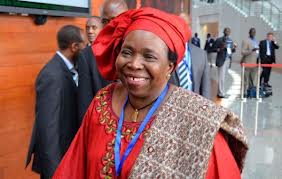
Nkosazana Dlamini-Zuma
Newly elected African Union (AU) Commission chairwoman Dr Nkosazana Dlamini-Zuma says a lack of infrastructure development is the biggest challenge facing Africa, addressing a gathering of representatives of the Progressive Women’s Movement of South Africa this past Sunday in Pretoria, Dlamini-Zuma believed that the African Union’s vision of more integration could only be reached if infrastructure on the continent was significantly improved.

She made clear her vision and priorities for the continental organisation as she pointed out that transport and communication links were not doing enough to connect countries with each other, she said there could be no integration as imagined by the African Union without a proper infrastructure liking the African countries. Dr Dlamini-Zuma –who earlier this month called for a united African Union after her election was criticised by other country members and left the continental governing body divide between French and English speaking states –also believed that the dream for an integrated Africa would further be achieved by the Pan African Parliament becoming a legislative body which would “harmonise legislation” across the continent.

“How do you build a railway in the middle of war?” she asked as she admits that integration could also not be successfully achieved if peace was not achieved on the continent. She said that while the continent had many challenges it also had many opportunities of which it needed to take advantage, and enormous agriculture, energy and human resource potential.
Regarding her mandate at the helm of the AU, Dlamini-Zuma said: “When I got there, I will be working as a servant of Africa and not South Africa.” Assuring Africans people that more will be made while she’s in charge.

She concluded that the direction which the African Union took would need to be determined with the involvement of its citizens and not its government alone, “If it’s left to government, it’s not going to go anywhere fast” she said.

Nkosazana Dlamini-Zuma doctor in training has brought noticeable changes to the South African department of Home Affairs, previously viewed as a centre of corruption and incompetence.

                                                                                                                                         Additional words Sapa   

Wednesday, 18 July 2012

AU: the new Commission chief and the challenges.


By Gael Masengi

Dr Nkosazana Dlamini-Zuma
The newly elected chairwoman of the African Union commission, Nkosazana Dlamini-Zuma faces tough challenges in early days of her mandate.

On Sunday, South Africa’s minister of Home Affairs was elected head of AU commission; Dr Dlamini-Zuma became the first female to hold the post, beating the incumbent Gabonese Jean Ping after months of power struggle that threatened to divide the already dysfunctional organisation. But the South African diplomat has yet to prove that she is the right woman for the job as she faces tougher challenges than her election, the continent is embraced with various on-going conflicts from north, east to central.

One of them is the most talked-about and disturbing, rebels attacks in the eastern Democratic Republic of Congo and the United Nation’s recent report showing the implication of Rwanda which her predecessor completely failed to solve. Unlike Jean Ping, ex-miss Zuma is a distinguished politician who attracted praises for her hard work at the helm of the then disorganised South African department of Home Affairs and her contribution to the glory days of her country’s foreign policy back in the days of former president Thabo Mbeki but the boiling conflicts in the DRC, Sudan and South Sudan or the coup in Mali are different stories all together, this is a baptism of fire for her as it seeks more than just being strong enough to handle all of Africa’s never ending problems and above all to re-unite the continent after her election which revealed a deep division that reign within the union’s French and English speaking countries. The AU’ second summit in Addis Ababa, Ethiopia (which was initially scheduled to take place in Malawi’s capital Lilongwe) didn’tjust help to break the union’s long tradition of “only male” leaders but it did certainly serve as a neutral ground for Rwanda and its larger neighbour the Democratic Republic of Congo to try to settle their differences as they both agreed via the respective president to an international force to intervene in Congo even though UN peacekeepers are already in the region.

Dr Dlamini-Zuma’s victory on the other hand will have an immense impact and hopefully it will strengthen South Africa’s damaged foreign policy specifically on its relation with fellow Africans due to SA’s unpopular support of the International Criminal Court and its arrest warrants against African politicians. Optimistically it will also help the South African population to connect with other fellow Africans as they always have been detached to the realities they go through.

Wednesday, 11 July 2012

What the sentencing of Lubanga means to Congolese.


By Gael Masengi

The 10 years old International Criminal Court (ICC) handed down its very first verdict this past Tuesday, sentencing a Congolese warlord Thomas Lubanga for 14 years in jail on charge of recruiting child soldiers. The 51 years old Lubanga was convicted in March of recruiting and using children in his Uganda backed Union of Congolese Patriots militia during fighting in Congo’s north-eastern region of Ituri in 2002-2003.
 Thomas Lubanga
Last night I sat down with South Africa based vibrant Congolese activists in Johannesburg ahead of their “anti-Rwanda” march scheduled later this week, what I got was a mixed feeling on Lubanga verdict while seventy per cent found ideal years given to Lubanga the remaining thirty thought it was not enough for such criminal. 

 However them all was more concerned about the current situation in the Kivu regions and specifically worried about the recent capture by Rwanda’ sponsored rebels of what they call strategic town of Rutshuru and a possible advance on Goma, the provincial capital. Congolese people of diaspora who only just about a month ago was still debating the outcome of last November presidential election and taking subversive measure to “oust” the fraudulently elected and yet incompetent president Joseph Kabila, are now shifting their focus towards finding ways of solving the endless wars/rebellions in east Congo.

After hours of discussions raging from ‘how to secure our borders’ to 'when Kabila will go' , I’ve concluded that the Democratic Republic of Congo lacks a true leadership believe it or not we can argue today on who or what really fuels the country’s everlasting army conflicts which had and still cost millions of lives but the solution is within Congolese themselves. When Paul Kagame said that Rwanda was being used as a “scapegoat” (though UN reports prove otherwise) to Congo’s internal problems, many didn’t believe him but the truth is the dude may partially be right. Today countries which have seen years of war are now talking economy development language, a better example is the neighbouring Angola, which had witnessed almost three decades of civil war is recovering and it is on the right track although a real democracy is not implemented. 

As someone I know always argue that the DRC also has to move on and discuss economy development but that’s impossible when safety and stability are the two major obstacles to the development of a country.
During my meeting with the devoted Congolese activists, I almost broke down (not in tears) when someone raisedthe subject regarding number of Congolese disperse around the world as refugees. 

To conclude, there are NO politicians in the country of Patrice E. Lumumba rather just people who get into politics to make a quick living from European donors’ money.

Monday, 2 July 2012

US ask Rwanda to halt fuelling conflict in the DRC.


By Gael Masengi

In response to the accusations from Congolese diplomats that the United States of America is blocking the United Nation’s so-called Group of Experts on Congo’s overwhelming evidence implicating Rwanda reports, this past week while Congolese people were “celebrating” Independence Day, Washington has released a statement calling its central African ally Rwanda to stop aiding army defectors waging war in the eastern side of the DRC. The statement has come as result of pressure from various Human Rights groups urging Kigali’s two largest donors (the UK and US) to influence their protégée to end with immediate effect the support of armed groups. Here’s what the US said:
   
 “The United States welcomes the release of the findings of the Group of Experts of the UN Security Council’s Democratic Republic of the Congo (DRC) Sanctions Committee. We are deeply concerned about the report’s findings that Rwanda is implicated in the provision of support to Congolese rebel groups, including mutinous elements now operating as the M23 armed group. Any such support threatens to further undermine security and fuel displacement in the region. We are also concerned about the report’s findings that the mutineers have forcibly recruited child soldiers.

Consistent with the UN Security Council’s arms embargo, we have urged all parties to respond constructively to the Group of Experts’ findings and have asked Rwanda to halt and prevent the provision the provision of such support from its territory. We have also urged the DRC and Rwanda to implement the principles of the joint Congolese-Rwandan communique issued following the June 19 meeting of the two countries’ foreign ministers in Kinshasa. Restraint and dialogue in the context of respect for each other’s sovereignty offer the best opportunity to resume the difficult to work of bringing peace and security to the eastern DRC and the broader region.”  

Source: state.gov